Oil Pressure Gauges in Refrigeration Systems: Why Net Oil Pressure Is the Reading That Matters
14/10/2026 · 104 مشاهدة
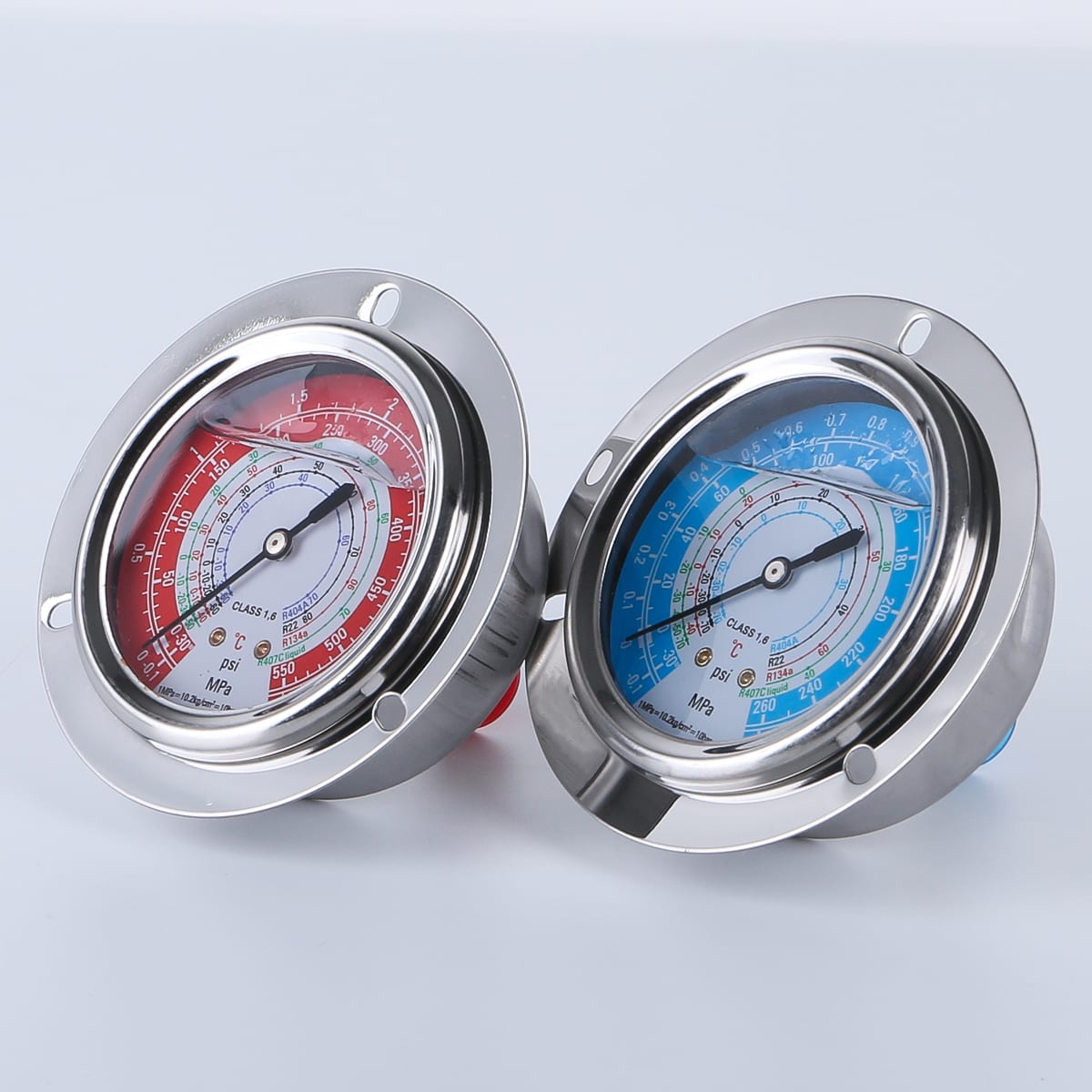
In a refrigeration compressor, an oil pressure gauge does not simply measure the pressure inside the crankcase. What technicians actually care about is net oil pressure—the difference between oil pump discharge pressure and crankcase pressure. That difference determines whether oil can reach the bearings. Understanding net oil pressure is the foundation for setting oil pressure safety controls and diagnosing compressor lubrication problems.
What Does an Oil Pressure Gauge Measure in a Refrigeration System?
An oil pressure gauge in a refrigeration compressor measures the pressure at the outlet of the oil pump. But the absolute reading on the gauge is not what matters most. The critical value is net oil pressure, which is the oil pump discharge pressure minus the crankcase pressure.
Crankcase pressure is essentially the compressor suction pressure. The oil pump draws oil from the crankcase and delivers it under pressure to the bearings and moving parts. Because the crankcase itself sits at suction pressure, the useful pressure head the pump actually produces is the difference between pump outlet pressure and crankcase pressure. Only when this difference is large enough can oil overcome the resistance of the oil passages and reach the bearings.
This is why the standard field procedure is to read the oil pressure gauge, read the crankcase pressure on the low-side gauge, and subtract the second from the first. The result is net oil pressure. Technical documentation for the Johnson Controls P28 series oil pressure safety control states the procedure directly: with the compressor running, read the oil pressure gauge and the crankcase pressure, then subtract crankcase pressure from the oil pressure gauge reading. The result is the net oil pressure available to the bearings.
Why an Oil Pressure Safety Control Is Necessary
A gauge alone provides information, but it cannot act. If the oil pump fails, an oil passage becomes restricted, or the oil level drops, net oil pressure can fall rapidly. No operator can watch a gauge continuously. That is why refrigeration compressors use an automatic protective device: the oil pressure differential switch, also called an oil pressure safety cutout.
This device continuously monitors net oil pressure. If the value falls below a preset threshold and stays there beyond a defined time delay, usually 90 to 120 seconds, it cuts power to the compressor. This prevents the bearings from being destroyed by oil starvation.
How an Oil Pressure Differential Switch Works
Startup Delay
When a compressor starts, the oil pump needs time to build pressure. For this reason, oil pressure differential switches include a built-in time delay. In the mechanical MP54 switch used on SRMTec compressors, for example, the switch does not monitor oil pressure during the first 90 seconds after startup. If net oil pressure is still below 0.65 bar, plus a 0.2 bar contact differential, after that 90-second window, the compressor is shut down.
The Copeland Sentronic electronic oil pressure control uses a 120-second delay. After startup, if net oil pressure does not reach 12 to 14 PSID within two minutes, the module's L-M contacts open and the compressor stops.
Running Monitoring
Once the startup delay ends, the switch monitors net oil pressure continuously. If net oil pressure drops below the setpoint during normal operation and remains there longer than the delay period, the compressor is shut down. SRMTec documentation notes that if oil pressure decreases below 0.65 bar for more than 90 seconds during running, the compressor is switched off.
Reset Method
After an oil pressure differential switch trips, it normally requires manual reset. This means a service technician must visit the site, investigate the cause—low oil charge, worn oil pump, restricted oil passage, or refrigerant dilution of the oil—and then manually reset the switch. Manual reset ensures the compressor cannot restart automatically while the lubrication problem remains unresolved.
Reference Values for Net Oil Pressure
Requirements vary by compressor model and operating condition, but the following values illustrate typical practice:
The Copeland Sentronic oil pressure control sensor opens its circuit when net oil pressure falls below 7 to 9 PSID, and closes when net oil pressure rises above 12 to 14 PSID. The Johnson Controls P28 cut-out setting is typically 6 to 8 PSI below normal running net oil pressure.
The mechanical MP54 switch on SRMTec reciprocating compressors is set at 0.65 bar, roughly 9.4 PSI. The RefComp electronic oil pressure differential switch uses a differential setting of 0.65 bar ± 0.15 bar.
These differences make one point clear: net oil pressure requirements vary between compressor manufacturers. The correct cut-out setting must always be taken from the specific equipment application manual.
Cold Starts and Refrigerant Dilution
In low ambient conditions, oil viscosity increases. At the same time, if liquid refrigerant accumulates in the crankcase, it dilutes the oil. Both conditions make it difficult to establish net oil pressure. RefComp technical documentation notes that differential oil pressure hardly reaches proper working values with cold oil, or with high refrigerant dilution in the oil inside the crankcase.
This is why oil pressure differential switches need a startup delay, and why some systems use crankcase heaters during cold starts to drive dissolved refrigerant out of the oil.
From Mechanical Switches to Electronic Monitoring
Traditional oil pressure protection uses a mechanical differential switch that senses the pressure difference between the oil pump inlet and outlet through a bellows or piston. The Copeland Sentronic series takes an electronic approach: a sensor measures net oil pressure directly, while the module provides timing and relay output functions.
Electronic solutions offer higher accuracy, more flexible settings, and the ability to avoid nuisance trips through a current sensing relay. When the compressor stops because of motor overload protection, the current sensing relay removes power from the oil pressure control module at the same time, preventing an unnecessary oil pressure trip when there is no oil pressure simply because the compressor is not running.
Conclusion
In a refrigeration system, the value of an oil pressure gauge lies not in the absolute pressure at the pump outlet, but in helping the technician calculate net oil pressure—the difference between oil pump pressure and crankcase pressure. That difference is the true indicator of whether oil can effectively lubricate the bearings. The oil pressure differential switch uses net oil pressure as its monitored variable, cutting the compressor when lubrication is insufficient and preventing catastrophic damage.
For anyone commissioning or maintaining refrigeration compressors, understanding net oil pressure, knowing how to measure it correctly, and setting oil pressure protection according to the equipment manual are fundamental skills. Overlooking this point can lead to premature compressor failure caused by lubrication problems.