The Role of Ball Valves in Refrigeration Systems: A Complete Guide
16/10/2026 · 180 مشاهدة
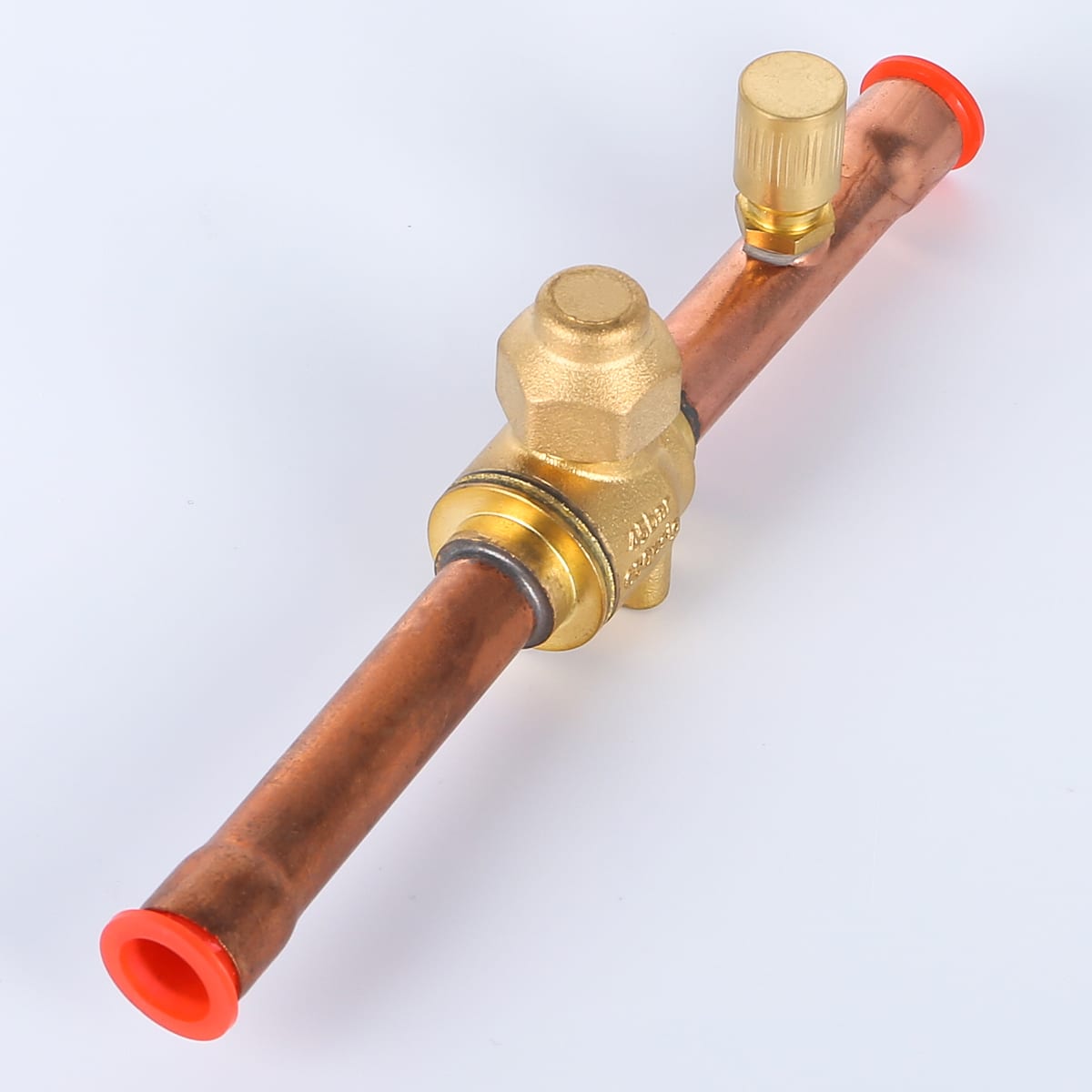
In refrigeration and air conditioning systems, reliable flow control is essential for safe operation, efficient maintenance, and long-term performance. While much attention is given to compressors, expansion valves, and electronic controls, the humble ball valve quietly performs one of the most important functions in the circuit: providing positive, leak-free isolation of refrigerant flow when needed. Whether you are designing a new system, servicing existing equipment, or upgrading for modern refrigerants, understanding the role of ball valves is essential. This article explores how ball valves work, where they are used, how to select them, and why they remain a preferred choice for isolation in refrigeration systems worldwide.
What Is a Ball Valve?
A ball valve is a quarter-turn valve that uses a hollow, pivoting sphere (the "ball") to control flow. The ball has a bore through its center. When the valve handle is turned so the bore aligns with the pipeline, flow passes through freely. When turned 90 degrees, the solid portion of the ball blocks the passage, stopping flow completely.
Key characteristics of ball valves include:
Quarter-turn operation – open or closed in a 90-degree rotation
Full-port or reduced-port design – full-port versions offer minimal pressure drop
Bubble-tight sealing – provides positive shutoff when closed
Low torque operation – easy to operate manually or with actuators
Durable construction – available in brass, stainless steel, and other alloys
In refrigeration systems, ball valves are most commonly used as manual isolation valves, allowing sections of the circuit to be isolated for service, repair, or component replacement without recovering the entire refrigerant charge.
Primary Functions of Ball Valves in Refrigeration Systems
1. System Isolation for Service and Maintenance
The most important function of a ball valve in a refrigeration system is isolation. When a component such as a filter-drier, expansion valve, solenoid valve, or sight glass needs to be replaced or serviced, the technician can close the ball valves on either side of the component, pump down or recover the refrigerant in that section, and perform the work without disturbing the rest of the system.
This capability provides enormous practical benefits:
Reduced refrigerant loss – only the isolated section needs to be evacuated
Faster service times – no need to recover the entire system charge
Lower labor costs – simpler, safer maintenance procedures
Improved safety – less refrigerant handling and exposure
Typical isolation points include:
Suction line and liquid line at the compressor
Inlet and outlet of the filter-drier
Around the expansion valve
At the receiver and condenser
Before and after solenoid valves
2. Pump-Down and Charging Assistance
Ball valves are frequently used in conjunction with the pump-down cycle. By closing the liquid line ball valve, a technician can force the compressor to pump refrigerant into the receiver or condenser, creating a low-pressure condition in the evaporator side of the system. This is useful for:
Leak testing specific sections
Replacing evaporator components
Adding or removing refrigerant
Performing repairs without full recovery
During initial charging, ball valves allow precise control of refrigerant flow into different parts of the system, making the process safer and more controllable.
3. Flow Control and Balancing
Although ball valves are primarily designed for on/off service, full-port and reduced-port designs can also be used for basic flow balancing in some multi-circuit systems. However, for precise modulation, a ball valve should not be used—needle valves or electronic expansion valves are better suited for that purpose.
That said, ball valves provide reliable, repeatable flow characteristics that make them useful in:
Distributing refrigerant between parallel circuits
Isolating individual evaporator coils in multi-coil systems
Balancing flow in large commercial and industrial installations
4. Safety and Emergency Shutoff
In systems using flammable refrigerants (A2L class), safety regulations increasingly require the ability to isolate refrigerant-containing sections quickly. Ball valves provide a simple, reliable means of manual emergency shutoff, complementing automatic safety devices such as solenoid shut-off valves.
Their quarter-turn operation and clear visual position indication (handle alignment) make them ideal for emergency situations where speed and certainty matter.
Types of Ball Valves Used in Refrigeration
Type Description Typical Application
Full-port ball valve Bore equals pipe diameter; minimal pressure drop Main liquid and suction lines
Reduced-port ball valve Bore smaller than pipe; some pressure drop Cost-sensitive or space-limited installations
Two-way ball valve Standard on/off flow control General isolation
Three-way ball valve Diverts or mixes flow between ports Multi-circuit and heat recovery systems
Brazed ball valve Permanently joined by brazing Hermetic refrigeration circuits
Flare/threaded ball valve Mechanical connection Serviceable joints
Access valve with ball Combined isolation and service port Charging and diagnostics
Refrigeration-specific ball valves are typically designed with extended stems so the handle can be operated through insulation, and with seals compatible with refrigerants and POE oils. Many models include a Schrader or access port for service connections.
Selection Considerations
Choosing the right ball valve for a refrigeration application requires attention to several factors:
Refrigerant Compatibility: Ensure seals and materials are compatible with the refrigerant in use, including A2L refrigerants such as R-32, R-454B, and R-1234yf, as well as high-pressure refrigerants like R-410A and R-744 (CO₂).
Pressure and Temperature Ratings: Verify the valve is rated for the maximum system pressure and the full operating temperature range, including defrost and high-ambient conditions.
Port Size and Pressure Drop: For main lines, full-port valves minimize pressure drop and energy loss. Reduced-port valves may be acceptable in less critical locations.
Connection Type: Brazed connections offer leak-free, permanent joints; flare and threaded connections allow easier replacement but require careful sealing.
Stem Design: Extended stems allow operation through insulation. Some valves feature stem extensions or cap designs for harsh environments.
Actuation: Manual handles are standard, but ball valves can also be equipped with electric or pneumatic actuators for automated isolation.
Certifications: For safety-critical applications, look for valves certified to relevant standards, including UL, CSA, and A2L-specific requirements.
Installation Best Practices
Proper installation ensures reliable performance and long service life:
Install in the correct flow direction – most ball valves are bidirectional, but check manufacturer guidance
Support the valve – avoid stress on brazed or threaded joints
Use proper brazing techniques – purge with nitrogen to prevent oxidation inside the valve
Allow for handle clearance – ensure the handle can rotate fully through 90 degrees
Insulate properly – use extended-stem valves to allow insulation without blocking operation
Leak test after installation – always verify tightness before charging the system
Maintenance and Troubleshooting
Ball valves are among the most reliable components in a refrigeration system, but they do require occasional attention:
Common Issues:
Stem leaks – usually caused by worn O-rings or seals; often repairable with a stem repair kit
Stuck valve – may result from debris, corrosion, or lack of exercise; operate periodically to prevent seizing
Handle breakage – replace handle or valve if the stem is damaged
Internal leakage – indicates seat damage; valve replacement is typically required
Best Practices:
Exercise valves periodically – open and close them during routine maintenance to prevent seizing
Do not use ball valves for throttling – partial opening can erode seats and cause leakage
Replace seals when servicing – use manufacturer-approved repair kits
Record valve positions – especially in multi-valve systems, to avoid confusion during service
Common Misconceptions
"Ball valves can be used to regulate flow."
Ball valves are designed for on/off service. Using them to throttle flow can damage the seats and lead to leakage. Use needle valves or electronic expansion valves for modulation.
"Any ball valve will work in a refrigeration system."
Refrigeration ball valves are specifically designed with compatible seals, extended stems, and pressure ratings for refrigerant service. General-purpose plumbing valves are not suitable.
"Ball valves never leak."
While ball valves provide excellent shutoff, seals can degrade over time, especially if the valve is not exercised or is exposed to contaminants. Periodic maintenance is still required.
Conclusion
Ball valves may not be the most glamorous component in a refrigeration system, but they are among the most practical and valuable. By providing reliable, quarter-turn isolation of refrigerant flow, they make service, maintenance, and repairs faster, safer, and more economical. They also contribute to system safety, especially in modern A2L refrigerant applications where quick isolation is a regulatory requirement.
For system designers, specifying high-quality refrigeration ball valves at key isolation points is a small investment that pays off throughout the life of the equipment. For service technicians, understanding how and where ball valves are used—and how to maintain them properly—is fundamental to efficient, professional refrigeration work.
As refrigerants evolve and systems become more complex, the ball valve will continue to play an essential role in keeping refrigeration circuits controllable, serviceable, and safe.
For more technical guides on refrigeration components and system optimization, explore our comprehensive resource library and product catalog.