The Role of the Sight Glass in Refrigeration Systems: A Complete Guide
16/10/2026 · 135 مشاهدة
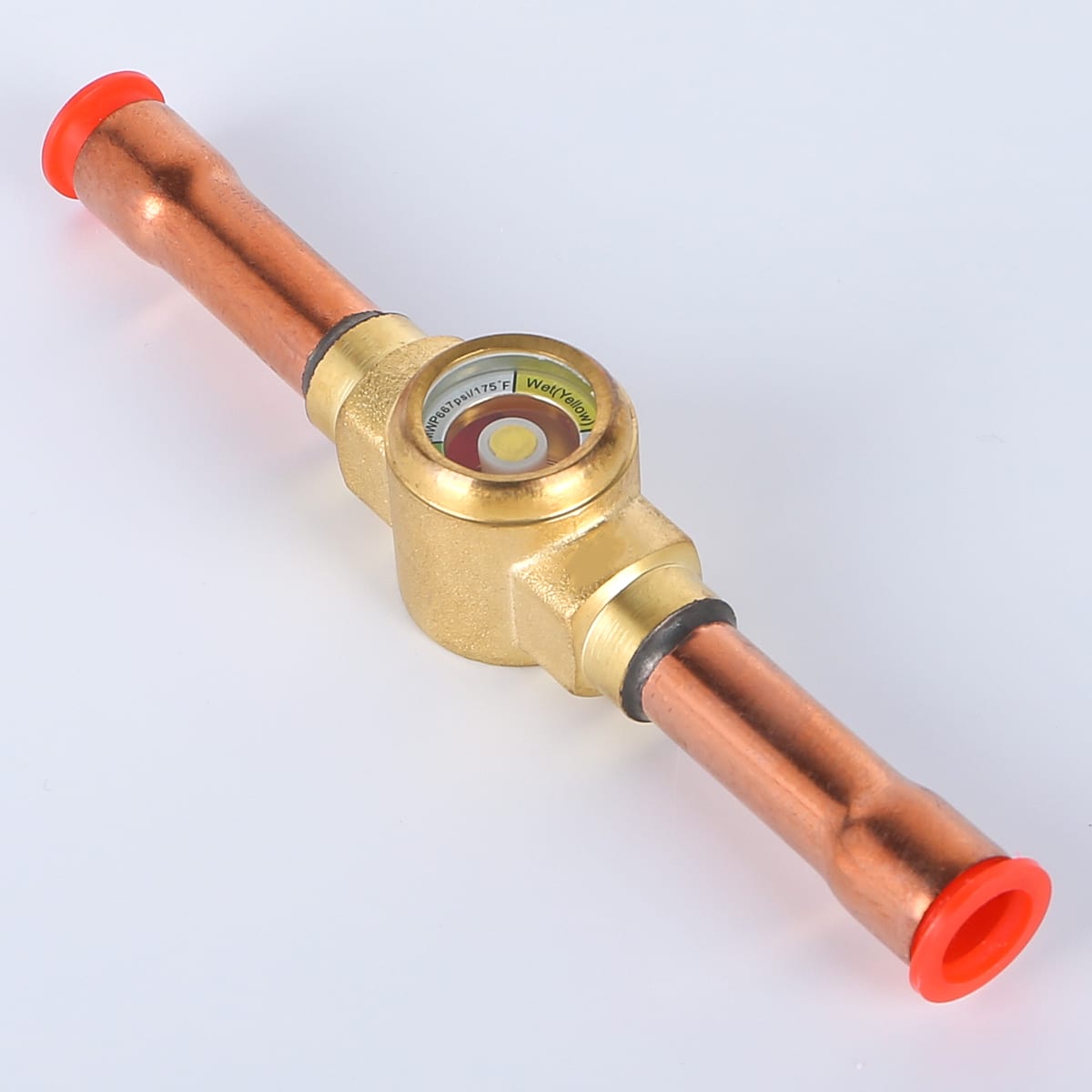
In any refrigeration or air conditioning system, maintaining the correct refrigerant charge and ensuring a clean, moisture-free circuit is essential for reliable operation. Among the many components that help technicians achieve this, the sight glass (also called a moisture indicator or liquid indicator) is one of the simplest yet most valuable diagnostic tools available. Despite its small size and low cost, the sight glass provides critical real-time information about system health that no other single component can match. This article explains what a sight glass does, where it is installed, how to read it correctly, and why it deserves a place in every well-designed refrigeration system.
What Is a Sight Glass?
A sight glass is a small, transparent window installed in the liquid line of a refrigeration system. It allows technicians to visually observe the condition of the refrigerant flowing through the circuit. Most modern sight glasses combine three functions in a single device:
Refrigerant flow indication – showing whether the liquid line is full of liquid or contains flash gas
Moisture indication – using a color-changing element to reveal the presence of water in the system
Moisture content level – indicating whether moisture levels are safe, cautionary, or critical
The device consists of a metal or brass housing with a sealed glass viewing port, a color-indicating element (typically a cobalt-based chemical compound), and often a threaded or brazed connection for installation in the liquid line.
Primary Functions of a Sight Glass
1. Verifying Proper Refrigerant Charge
The most common use of a sight glass is to confirm that the system has an adequate refrigerant charge. When the system is running under stable conditions, the liquid line should be completely full of liquid refrigerant with no bubbles visible in the sight glass.
Clear glass = adequate charge and proper liquid seal
Bubbles or foam = insufficient charge, flash gas, or a restriction in the liquid line
Technicians use this visual confirmation as a quick, reliable method for verifying charge without needing to connect manifold gauges. While not a substitute for proper superheat and subcooling measurements, the sight glass provides an immediate, non-intrusive indication of system status.
It is important to note that bubbles in the sight glass can also be caused by:
A partially clogged filter-drier or restricted liquid line
Insufficient subcooling at the condenser
A faulty expansion valve
Low ambient conditions causing reduced condensing pressure
Therefore, bubbles should always be investigated alongside other diagnostic readings rather than treated as definitive proof of undercharge.
2. Detecting Moisture Contamination
Moisture is one of the most destructive contaminants in a refrigeration system. Water in the circuit can:
Form ice crystals at the expansion valve, causing blockages
React with refrigerant and oil to form acids
Accelerate copper plating and compressor winding damage
Degrade lubricating oil and promote sludge formation
The sight glass‘s color-changing element provides an early warning of moisture intrusion. The indicator changes color as moisture levels rise:
Color Moisture Level Action Required
Green / Blue Dry (< 50 ppm) Normal – no action
Yellow-green Caution (50–100 ppm) Monitor closely
Yellow Wet (> 100 ppm) Replace filter-drier immediately
The exact color thresholds and colors vary by manufacturer, so always consult the specific product data sheet. Once the indicator reaches the “wet” range, the filter-drier has typically become saturated and must be replaced. The sight glass element itself may also need replacement if it has been exposed to excessive moisture over time.
3. Confirming Liquid Line Integrity
A sight glass installed at the outlet of the filter-drier serves as a verification point that the drier is functioning correctly. If the sight glass shows bubbles immediately downstream of a new filter-drier, this suggests the drier is restricted or the system still contains non-condensables.
Similarly, a sight glass installed before the expansion valve confirms that the refrigerant reaching the metering device is fully liquid. Flash gas at this point would severely reduce valve capacity and system efficiency.
4. Aiding System Troubleshooting
Because the sight glass provides immediate visual feedback, it is an invaluable troubleshooting tool. Common diagnostic scenarios include:
Bubbles during steady operation → low charge, restriction, or insufficient subcooling
Bubbles only at startup → normal behavior as the system stabilizes
No bubbles but high superheat → possible overcharge or expansion valve issue
Yellow indicator → moisture contamination requiring drier replacement
Oil streaks or dark residue → possible compressor wear or oil breakdown
Combined with pressure and temperature readings, the sight glass helps technicians narrow down problems quickly and accurately.
Where Is the Sight Glass Installed?
Sight glasses are typically installed in the liquid line, most commonly:
At the outlet of the filter-drier – to verify the drier is not restricted and the refrigerant is dry
Just before the expansion valve – to confirm a solid column of liquid reaches the metering device
On the receiver outlet – in systems with receivers, to confirm proper liquid supply
Some systems also use sight glasses on the oil return line or compressor crankcase to monitor oil level and condition, though these are less common in standard refrigeration units.
Types of Sight Glasses
Type Function Typical Application
Standard sight glass Flow indication only Basic liquid line monitoring
Moisture-indicating sight glass Flow + moisture indication Most refrigeration systems
Sight glass with moisture element Replaceable indicator Systems requiring frequent monitoring
Oil level sight glass Oil level and condition Compressors and receivers
Dual-port sight glass Multiple viewing angles Confined installation spaces
Modern moisture-indicating sight glasses often feature a replaceable indicator element, allowing technicians to renew the moisture sensor without replacing the entire valve body—a significant cost and time saving.
Selection Considerations
When choosing a sight glass for a refrigeration system, consider the following:
Refrigerant Compatibility: Ensure materials and seals are compatible with the refrigerant in use, including A2L and high-pressure refrigerants.
Connection Size and Type: Match the connection to the liquid line size and installation method (flare, solder, or threaded).
Moisture Sensitivity: Select an indicator calibrated for the expected moisture range of the application. Some indicators are designed for specific refrigerant types.
Operating Pressure and Temperature: Verify the sight glass is rated for the system’s maximum working pressure and temperature range.
Replaceable vs. Sealed Element: Replaceable-element designs offer lower long-term maintenance costs.
Maintenance and Best Practices
To get the most value from a sight glass:
Check it during steady-state operation, not immediately after startup, when bubbles are normal
Record indicator color during routine maintenance to track moisture trends over time
Replace the filter-drier whenever the indicator shows excessive moisture
Clean the glass if it becomes obscured by oil or debris
Replace the indicator element according to manufacturer recommendations or after moisture exposure
Combine sight glass readings with pressure, temperature, and superheat/subcooling measurements for accurate diagnosis
Common Misconceptions
“A clear sight glass means the charge is correct.”
Not necessarily. A system can be overcharged and still show a clear sight glass. Always verify with subcooling measurements.
“Bubbles always mean low refrigerant.”
Bubbles can result from restrictions, insufficient subcooling, or flashing caused by pressure drop—not just low charge.
“The moisture indicator lasts forever.”
The indicating element degrades over time and after repeated moisture exposure. It should be replaced periodically.
Conclusion
The sight glass is one of the smallest and least expensive components in a refrigeration system, yet it delivers outsized value. By providing immediate visual confirmation of refrigerant charge, moisture contamination, and liquid line integrity, it empowers technicians to diagnose problems quickly and prevent costly compressor damage.
For system designers, specifying a high-quality moisture-indicating sight glass is a low-cost investment that pays for itself many times over in reduced downtime and extended equipment life. For service technicians, understanding how to read and interpret the sight glass is a fundamental skill that supports accurate, efficient troubleshooting.
As refrigeration systems grow more sophisticated and refrigerant regulations tighten, the humble sight glass remains an indispensable tool—simple, reliable, and always informative.
For more technical guides on refrigeration components and system optimization, explore our comprehensive resource library and product catalog.