The Role of Filter Drier in Refrigeration Systems: A Complete Selection Guide
14/10/2026 · 113 مشاهدة
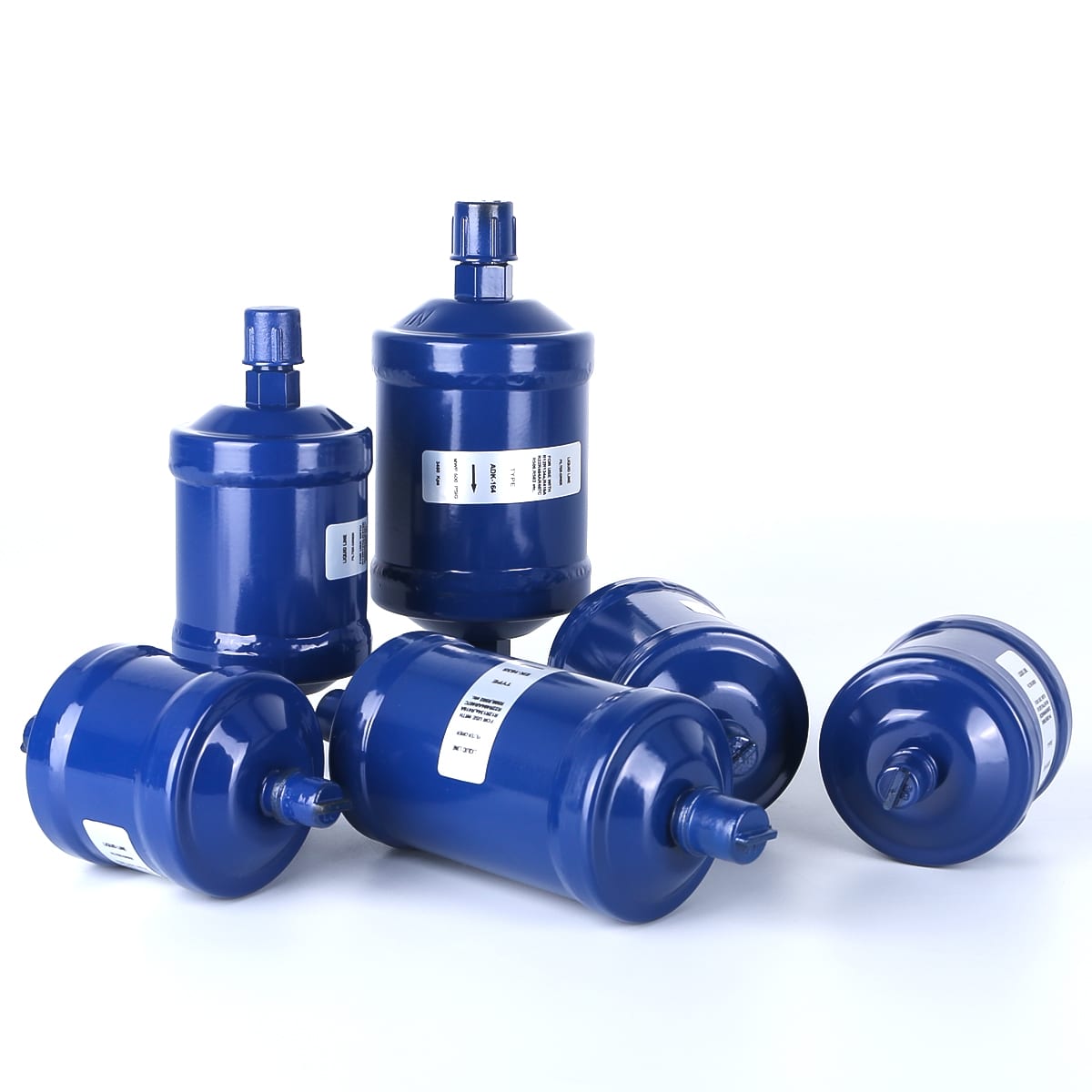
Filter Drier in refrigeration systems are not a single component but a family of protective devices, each targeting a specific contaminant at a specific point in the circuit. This guide covers filter-driers, suction filters, and compressor-integrated filters, and explains how to select the right type and size for your application.
Why Filtration Matters in Refrigeration
Moisture, acid, and solid debris are the three primary enemies of any refrigeration system. Moisture reacts with refrigerant and oil to form acid, which corrodes copper piping and degrades components. Debris—metal chips, oxide particles, and sludge—can block capillary tubes, damage compressor valves, and cause motor burnout.
Adequate filtration is not optional. It is the difference between a system that runs for decades and one that fails prematurely. The components that provide this protection fall into three broad categories: liquid line filter-driers, suction line filters, and compressor-integrated filters.
Liquid Line Filter-Driers: The Primary Defense
The filter-drier is the most common filtration component in any refrigeration circuit. It is installed in the liquid line, typically close to the expansion device, where it can catch contaminants before they reach the metering device. Its function is to absorb residual moisture, adsorb acid, and filter solid particles.
Desiccant Composition Determines Function
Inside a filter-drier, a desiccant core performs the chemical work. Three materials are used, each targeting a specific contaminant:
Molecular sieve — removes moisture
Activated alumina — removes acid
Activated carbon — removes wax, oil breakdown products, and sludge
The blend of these materials determines what the filter-drier does best.
General-purpose driers (such as the EK series or Danfoss DCL/DCLE) use a blend of approximately 75-80% molecular sieve and 20-25% activated alumina. This composition provides strong moisture removal with moderate acid adsorption, making it suitable for most systems, including those using POE oil. The EK core offers a two-tiered filtration method: 40-micron surface filtering and 20-micron deeper filtering, exceeding the industry-standard 40-micron rating.
High-moisture driers (such as Danfoss DML/DMLE) use a 100% molecular sieve core. These are optimized for applications where moisture removal is the dominant concern, minimizing the risk of acid formation through hydrolysis.
Burnout cleanup driers (such as the HH series or Sporlan Catch-All) incorporate activated carbon in addition to molecular sieve and activated alumina. Activated carbon adsorbs wax, resin, oil, and sludge—the byproducts of compressor burnout. This makes them essential after a motor burnout, but their moisture capacity is only about 30-45% of a standard drier, so they are not a substitute for general-purpose protection.
Selection Criteria
Selecting a filter-drier requires matching it to the system’s operating conditions and refrigerant charge.
Flow capacity is the starting point. Manufacturers publish flow ratings at a specified pressure drop (typically 0.07 bar or 1 psi). The required reference flow capacity must be corrected for the actual operating temperatures and refrigerant type. For example, a system requiring 15 kW of cooling with R404A at +40°C liquid and -10°C evaporating temperature would calculate a reference flow capacity of approximately 17.4 kW, leading to a filter model rated at 17.9 kW.
Dehydration capacity is equally important. Standards such as ARI 710-2009 and DIN 8949 specify the moisture adsorption capacity required based on refrigerant charge and acceptable moisture levels. A system with 34 kg of R407C, for instance, would require approximately 34 grams of water adsorption capacity at the operating temperature.
Maximum pressure drop should be monitored in service. A liquid line filter-drier should not exceed 3 PSI pressure drop; a suction line filter should stay below 1 PSI. Rising pressure drop indicates clogging and signals replacement.
Installation Considerations
Direction matters. Standard filter-driers are designed for unidirectional flow. Reverse flow will wash out previously collected debris and cause high pressure drop. For heat pump applications that reverse flow between heating and cooling modes, a bi-flow filter-drier is required.
Vertical installation requires the inlet on top and outlet at the bottom. This ensures the filter remains full of refrigerant, so the desiccant is used most effectively. Horizontal mounting is acceptable, but vertical mounting with the inlet at the bottom should be avoided.
Suction Line Filters: Protecting the Compressor
Suction line filters serve a different purpose from liquid line filter-driers. They are installed in the suction line immediately ahead of the compressor, where they capture solid contaminants before they reach the motor windings and compression mechanism.
Why Suction Filtration Matters
Compressor manufacturers have identified a direct cause-and-effect relationship between suction line debris and motor burnout. Metal chips, oxide particles, and other contaminants carried through the suction line can become embedded in motor windings. During startup, the natural flexing of the windings causes these particles to scrape the motor insulation, eventually leading to burnout.
Suction filters are particularly important in field-built systems where cutting and brazing of lines introduces debris, and after any compressor replacement or burnout cleanup.
Bypass Relief Feature
A critical design consideration for suction filters is the bypass relief feature. If the filter element becomes clogged with debris, a relief device opens to allow suction gas to bypass the element. This ensures the hermetic motor continues to receive cooling flow, preventing overheating even when the filter is saturated.
On heat pump applications or systems using hot gas defrost, the bypass should be installed inactive. This prevents excessive cycling of the element, which could damage the filter media.
Selection Criteria
Suction filter selection depends on circuit capacity, the intended effect (moisture, acid, or particulate retention), line diameter, maximum allowable pressure drop, and cost. The most important application is on remote systems with long lines, where accumulated dirt from the evaporator and suction line poses the greatest risk.
Compressor-Integrated Filters
Some compressors incorporate filters directly into the suction and discharge passages. A rotary compressor may use a porous filter in the induction muffler to capture contaminants from the evaporator, and a similar filter in the discharge muffler to capture particles generated within the compressor itself. In a linear compressor, a first filter on the suction muffler blocks foreign substances from entering the cylinder, while a second filter between the frame and cylinder captures particles in the high-pressure discharge gas.
These integrated filters reduce the need for external piping filters, but they do not eliminate the need for system-level filtration. Their role is to protect the compressor’s internal components, not to clean the entire circuit.
Selection Summary
Filter Type Location Primary Target Key Selection Factor
Liquid line filter-drier Liquid line, near expansion device Moisture, acid, particles Refrigerant charge, flow capacity, pressure drop
Suction line filter Suction line, before compressor Particles, debris Circuit capacity, line diameter, bypass requirement
Burnout cleanup drier Liquid or suction line Acid, wax, sludge Contaminant severity, post-burnout cleanup
Compressor-integrated filter Inside compressor Particles, oil Compressor design (not field-selectable)
Conclusion
Filters in refrigeration systems are not interchangeable. A liquid line filter-drier protects the expansion device from moisture and acid. A suction line filter protects the compressor from debris. A burnout cleanup drier addresses the specific chemical and organic byproducts of motor failure. Selecting the right filter requires understanding what you are protecting against, where in the circuit the protection must occur, and how the filter’s capacity matches the system’s refrigerant charge and operating conditions. When in doubt, consult the equipment manufacturer’s specifications—a filter that is undersized or of the wrong type provides false confidence rather than real protection.